eStreamly has been creating its own podcast for the past three years – The live e-commerce podcast, and we’ve recorded well over 200 episodes. We’ve iterated many times, and after all these years, we still can’t say we’ve cracked the magic formula. So, is podcasting, and video podcasting in particular, valuable for your brand? Is it only applicable to B2B businesses, or is there some value for B2C brands as well? Let me share my thoughts on podcast strategy for brands.
In this post, I’ll dive deep into our podcasting journey, sharing what we’ve learned about creating a successful podcast strategy for brands, the challenges we’ve faced, and the unexpected benefits we’ve discovered.
Chapter 01Why We Created a Podcast
There are many reasons why we created a podcast, some valid, some more subjective. The podcast had two main objectives:
- Understand what it takes to create content and be serious about it.
- Use it as a customer acquisition channel.
The first goal turned out to be the right one. In a way, live shopping and video commerce are very intense from a content creation perspective. Understanding the challenges is a great learning experience, and I recommend it to anyone involved in content production or distribution.
Now, goal #2 was a different story. It took time to realize it, but a podcast is not an acquisition play. It’s more of an engagement tool and builds a trust factor. Prospects curious about eStreamly might be keen to listen to the podcast to take an educated decision. Is the company legit? Do they know what they are talking about? Prospects on a second or third meeting will sometimes refer to a comment from a recent podcast. So, definitely a great tool for building trust.
Chapter 02What We Learned
Understanding Your Audience’s Needs
First of all, we are true believers in answering questions before being asked. We love Marcus Sheridan’s book, “They Ask, You Answer,” which is based on the premise that 90% of all customer questions are the same, and if you create content around them, people will find you, and you will be relevant to search algorithms. The book is a great read to create a podcast strategy for your brand.
The truth is that, at first, most of our podcast content was inward-looking from an industry perspective. What is live shopping? How do you create an event? Most of those questions were basic. It was only later that we learned a very important lesson: People who consume content rarely come with zero knowledge of the topic. If you focus on easy-to-answer questions, your content will be poorly relevant to your audience and similarly poorly relevant to search engines. If I want someone interested in video commerce to understand and be interested in my content, I must provide value. We must go after the hard problems that this individual is trying to solve. Some will think it’s marketing 1o1 but many podcasts and blogs still not understanding this concept yet.
The unexpected value
A podcast is a great opportunity to meet and discuss with people who would never consider meeting you otherwise. Who doesn’t love a bit of attention from the world or wants sharing their own journey? Everyone loves to be on a podcast. As a result, we took it to a completely different level by inviting high-level executives, partners, and prospects. It enabled us to create unique relationships, build an incredible network, and, more importantly, learn immensely. I often say podcasting is a real-life MBA for the cost of your time. On the other hand, using the podcast as a way to create new relationships to bring in new business has not proven to be effective, at least for us. Although, there are a few podcasts in e-commerce using this strategy for customer acquisition with success.
The SEO play
A podcast is an interesting site backlink strategy and will help SEO. As you create content and have good descriptions, some listeners may link your podcast to their own content, share the podcast, and provide your own site with more relevancy in the eyes of search engines.
You Need a Great Process
A podcast strategy for brands, like live shopping in a way, is a three-phase process:
Pre-show:
If you have a guest-style podcast, you need to find the guest and research why they would be interesting for your audience. At eStreamly, we used a 15-minute pre-show call. This call helped us to assess the show’s direction, gauge guest relevance, and share housekeeping tips, like avoiding Bluetooth microphones
We also covered the show format and post-show expectations. As most guests are unfamiliar with us, it’s also a chance to introduce ourselves. Prior the pre-show, I would ask them to fill out a questionnaire on the calendar link requesting a short bio, their social media handles, a picture of the guest, and what topics they would feel comfortable talking about. While I usually don’t use all of the content, it is very helpful for show prep and repurposing.
During the show:
You need to have a show plan and have done your research on the guest. What questions do you want to ask, and why? What shoutouts do you need to make? You also need to start the show with some housekeeping. Make sure the audio is coming through properly and the camera is properly centered so you can use the video later. Typically, for a 30-minute recording, I book 45 minutes on the calendar and will do an hour if it’s the very first time I meet that guest. Doing the pre-show and show at the same time can be quite an annoying experience for the guest, who may feel they are wasting their time.
Post-show:
First, the video/audio needs to be cleaned up. I use Descript, which provides me with the transcript, video, and audio in three separate files. The software makes it easy to remove all unnecessary or unwanted parts of the show while maintaining the integrity of each file. You do need a strong internet and a solid computer with good memory or it’s not going to be a fun experience to work with descript.
Repurposing is key
Once you have the raw audio, the real work begins. Ensure your podcast description is optimized for search engines with strong SEO – 4,000 characters for most podcast players. While I personally didn’t use the long-form video with guests (finding myself distracted during recording), capturing video can be valuable. Finally, a text transcript is essential. Using AI, you can transform this transcript into a blog post, further extending the reach of your content.
Leveraging the video recording
I personally wasn’t using the long-form video with guests as I found myself focusing my attention on the discussion during recording and may end up not looking focused on the camera. We found creating 2-3 video clips from each podcast effective. Initially, I used someone else for this, but it often took more time unless they were highly skilled. So, I used an AI clipping software called Opus and found it effective. The issue with Opus is that you need a different software if you want to add a closing to your podcast, which I would highly recommend.
We would focus the video clip on 20-45 seconds of something said by the guest and showing the guest. Highlighting the guests makes them more likely to share, increasing the chances of your content being amplified and discovered by various groups of people. We found TikTok to be effective, where the videos could get 1,000-2,000 views each, whereas on Instagram or YouTube, the same video would get 50-150 views. We would post one video per week and tag the guest each time to amplify the content.
Role of transcript in your podcast strategy for brands.
Your text file transcript is also an interesting by-product as you can use AI to turn it into a blog post that shares the main learnings. It is also a great tool for creating meaningful podcast descriptions. Again, using Descript is a good way to process your raw file to be ready for repurposing.
Amplify your content
Email the guest when the show is live and share the assets (image for the podcast) alongside podcast links so they can share them. Tag the guest on social media for increased engagement and visibility. Some podcast hosts will make a point to ask that the guest must agree to share the show prior to even recording. I personally didn’t like that. We’re here to build a mutually beneficial relationship, not in a transaction mode.
Chapter 03Podcast Strategy: The Format, Length, and Other Considerations for your Brands
We initially tried a livestream, audio-only podcast. We simulcasted the stream on Twitter and Clubhouse. We were getting a lot of engagement, but it was too difficult to manage as we would get very random questions that could make the experience challenging for the listeners.
We then moved to a recorded podcast, initially audio and progressively introduced video. This is a good format, but personally, I missed the live interactivity and spontaneity.
So, I created a second show on the same channel and audience, this time a video livestream that I would push on Facebook and LinkedIn. I also moved away from the guest model as sourcing guests is very time-consuming. It’s not just cold outreach; you also face no-shows, constant reschedules, and inconvenient meeting times, sometimes scheduling 6-9 months out without any contact in between. It’s very hard to manage but can be valuable to consider in your podcast strategy for your brands.
Now, while livestream is great for immediate audience feedback, it comes with regular livestream challenges, which can be technical (audio issues, unstable internet, etc.) or time-related. To get an audience to tune in, you need consistency in the time you go live so they are trained and know when to expect you. This means you now have a weekly, biweekly, or monthly commitment, whatever frequency you’ve decided on, posted on your calendar.
Permanent Host?
Having permanent hosts for the show has been fantastic. Not only does it create a unique digital friendship, but it’s also way easier to manage. You don’t have to deal with all the newcomer issues and can focus on creating content that will interest the audience.
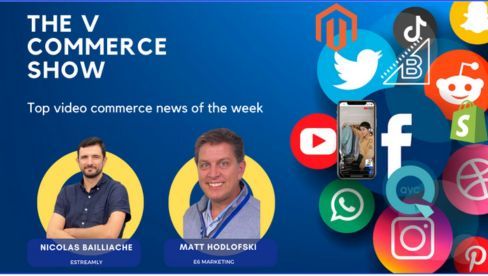
From a length perspective, I found that unless you are an exceptional storyteller or have a fantastic guest, it’s best to think about your audience’s valuable time. They will most likely listen during a commute to work, while picking up the kids, etc. So, a 15-20 minutes format is a great sweet spot. I’ve met podcasters having success with 5-8 minute shows. However, I found that sticking to a set schedule was very difficult. So, aim for 10 minutes to achieve 15 minutes and 15 minutes to achieve 20 minutes.
Chapter 04Live Shopping vs. Live Podcasting for your brand – What Strategy?
At eStreamly, several merchants have done shoppable livestream podcasting shows, inviting relevant guests in their category and leveraging the guest’s audience. In reality, it’s not much different from influencer marketing, but the show itself is not so much about the product. It’s about the guest and the category. The product is typically presented as a soft sell and leverages eStreamly’s in-video checkout and in-video product page technology to drive transactions. Live podcasting is valuable to consider in your podcast strategy for your brands.
Compared to live shopping events, our data show that users will stay longer on the show and be in greater numbers, but conversion rates tend to be lower. We don’t have data to see if those viewers will end up becoming customers down the line, but it is reasonable to expect that some will.
An interesting example of a brand leveraging live stream shopping for live podcasting
I hope that sharing my own experience has been interesting. Regardless of where you are in your own journey, if you have any questions about your podcast strategy, or livestreaming your brand, feel free to hit us up at eStreamly!